Kagura Matcha Home

Category

Wellness & Science

13 articles

Afternoon Matcha Without the Midnight Consequence: The Science of Timing Your Second Cup

Afternoon Matcha Without the Midnight Consequence: The Science of Timing Your Second Cup

Many wellness-conscious Americans avoid matcha after noon out of fear it will sabotage their sleep — but the biochemistry tells a more nuanced story. Understanding how L-theanine modulates caffeine absorption and how matcha interacts with your circadian rhythm may free you to enjoy an afternoon bowl without consequence. Here is what the research actually supports.

Beginner's Fortune: The Counterintuitive Reason New Matcha Drinkers Often Feel More

Beginner's Fortune: The Counterintuitive Reason New Matcha Drinkers Often Feel More

Newcomers to matcha frequently report dramatic shifts in focus, calm, and energy that long-term practitioners struggle to replicate. Understanding why this happens — and what it reveals about neurological adaptation, expectation, and ritual — offers a roadmap for reclaiming the full depth of your practice at any stage.

The Bowl as a Therapist: How Deliberate Matcha Preparation Heals the Nervous System From the Inside Out

The Bowl as a Therapist: How Deliberate Matcha Preparation Heals the Nervous System From the Inside Out

Long before the word 'mindfulness' entered the American wellness lexicon, Japanese tea masters understood something that neuroscience is only now beginning to quantify: the act of preparing tea with full bodily attention can reorganize a dysregulated nervous system. This article examines the psychological and somatic mechanisms behind intentional matcha preparation, and why, for a growing number of practitioners, the ritual itself has become as therapeutically significant as anything that happen

Matching Matcha to the Person, Not the Price Tag: A Practical Guide to Choosing Your Grade

Matching Matcha to the Person, Not the Price Tag: A Practical Guide to Choosing Your Grade

The assumption that ceremonial-grade matcha is universally superior deserves serious scrutiny. Individual factors—from caffeine sensitivity to wellness objectives—often matter far more than a product's position on the price spectrum. This guide cuts through the prestige narrative to help you identify the grade that genuinely serves your body and your life.

Ancient Technique, Modern Proof: The Chemistry Behind Why Hand-Whisked Matcha Outperforms Every Shortcut

Ancient Technique, Modern Proof: The Chemistry Behind Why Hand-Whisked Matcha Outperforms Every Shortcut

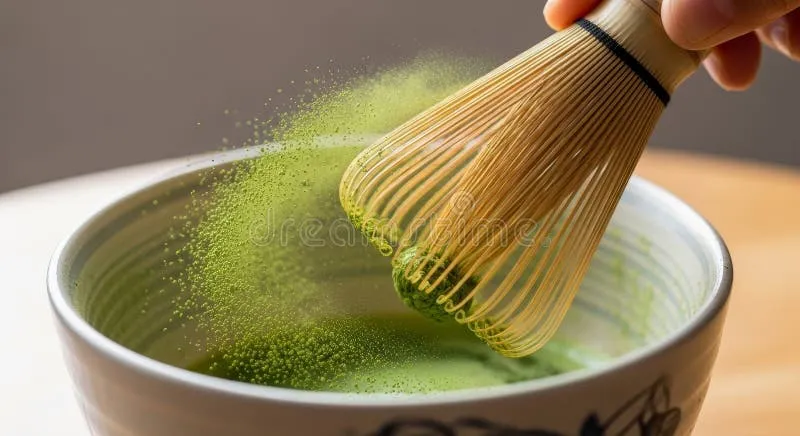
Beneath the elegance of the chasen and the ritual of the chawan lies a surprisingly precise biochemical argument for traditional matcha preparation. New research and centuries of Japanese tea master wisdom converge on a remarkable finding: the old ways were never merely ceremonial — they were optimized. This investigation unpacks why hand-whisking, controlled water temperature, and deliberate timing produce a measurably superior cup.

What the Research Actually Says About Matcha and Metabolism

What the Research Actually Says About Matcha and Metabolism

Matcha has been positioned by wellness culture as a metabolism-boosting superfood, but what does the peer-reviewed science actually support? This evidence-based examination separates verified findings from inflated claims, offering a realistic picture of how matcha can—and cannot—contribute to weight management goals.

Beyond the Bowl: The Science-Backed Wellness Applications of Matcha You Have Not Tried Yet

Matcha has earned its place in the American wellness conversation as a morning beverage, but the research surrounding this ancient powder points toward a far broader range of applications. From post-workout recovery to topical skincare and meditative practice, ceremonial-grade matcha offers a suite of evidence-informed benefits that extend well beyond what fits in a cup. Here is what the science says—and how to put it to work.

Wired Differently: What Happens to Your Brain When You Trade Coffee for Matcha

A growing cohort of high-performing professionals is quietly replacing their morning espresso with a bowl of ceremonial matcha—and the neurochemical rationale is more compelling than the wellness trend headlines suggest. This is an honest, science-grounded examination of what each beverage actually does inside the body, and why the choice between them may be more consequential than you think.

A Drinker's Guide to Japan's Powdered Teas: Hojicha, Genmaicha, Kukicha, and When to Choose Each

Matcha earns its prominence in the wellness world for good reason, but Japan's broader tradition of powdered and finely ground green teas offers a richer palette than most American consumers have encountered. From the roasted warmth of hojicha to the grassy restraint of kukicha, each variety carries a distinct nutritional profile and sensory character suited to different moments, moods, and health goals. Understanding the distinctions helps you build a tea practice that genuinely fits your life.

Calm Without the Crash: The Neurochemistry That Makes Matcha's Focus Uniquely Sustainable

Calm Without the Crash: The Neurochemistry That Makes Matcha's Focus Uniquely Sustainable

Matcha drinkers consistently describe a state of alert tranquility that coffee simply cannot replicate — and the explanation lies deep within the brain's chemistry. The amino acid L-theanine, found in extraordinary concentrations in shade-grown Japanese matcha, works in elegant synergy with caffeine to produce cognitive benefits that researchers are only beginning to fully understand. This article unpacks the science behind that distinctive calm clarity and explains how your preparation method d